
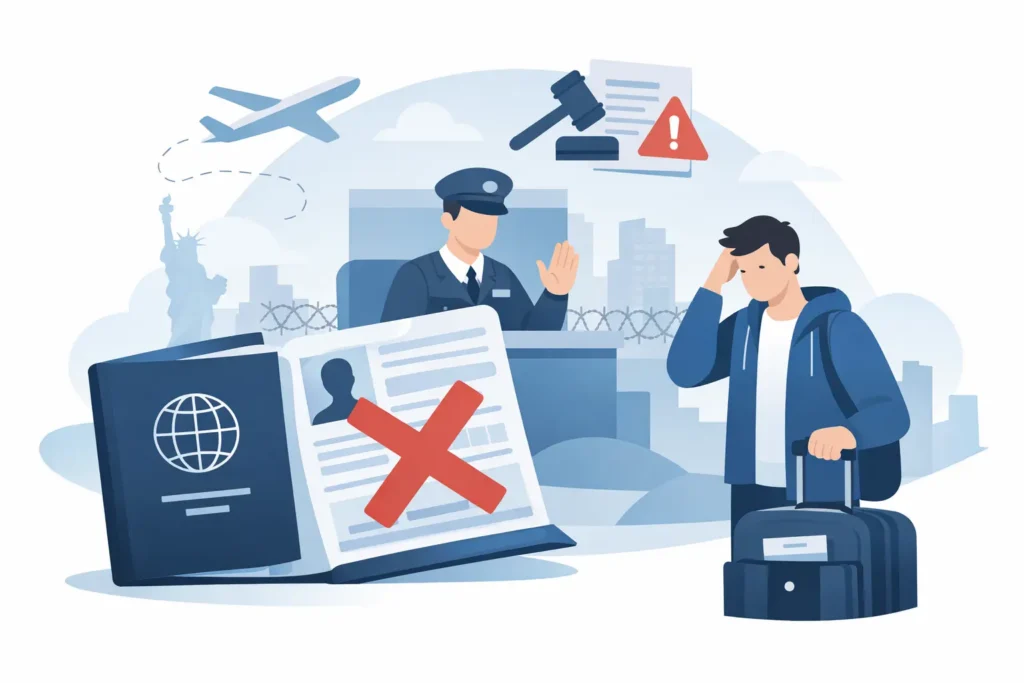
A visa refusal rarely comes down to one dramatic mistake. More often, the top reasons visas get refused are practical issues that could have been prevented – weak evidence, inconsistent information, missed criteria, or a poor understanding of how case officers assess risk. For applicants heading to Australia or New Zealand, that can mean lost time, lost application fees, and a far more difficult path the second time around.
The hard part is that many refusals happen even when the applicant believes they have done everything right. They may have a genuine reason to travel, study, work or join family, but migration decisions are not based on intention alone. They are based on whether the application clearly proves eligibility under the law, with the right documents, in the right format, and at the right time.
The top reasons visas get refused
One of the most common reasons for refusal is simply failing to meet the core visa criteria. Every visa subclass has its own requirements, and they are often more technical than applicants expect. A student may need to show genuine temporary entrant factors in a convincing way. A skilled worker may need the correct occupation, points score, skills assessment or English result. A family applicant may need to satisfy sponsorship, relationship or character rules. If one essential requirement is missing, the application can fall over even if the rest of the case is strong.
A close second is poor documentation. Case officers do not fill in gaps for applicants. If bank statements are incomplete, employment records do not match claimed dates, relationship evidence is too thin, or identity documents are unclear, the application may not carry enough weight. In some cases, the problem is not that the person is ineligible. It is that the evidence does not prove eligibility to the required standard.
Another major issue is inconsistent information. This catches out many applicants who have lodged previous visas, used different agents, or completed forms in a rush. Dates of employment, travel history, study history, relationship timelines and financial details all need to align across the application. Even small discrepancies can trigger concerns about credibility. Sometimes the error is innocent. From the decision-maker’s perspective, though, inconsistent information can suggest the applicant is unreliable or withholding something important.
Why evidence quality matters more than applicants realise
A strong application is not just a pile of documents. It is a case that tells a clear, credible story and supports each key claim with solid evidence. That distinction matters.
For example, many visitor visa applicants assume an invitation letter from family or friends will be enough. It helps, but it is rarely enough on its own. Decision-makers usually want to understand why the applicant will return home, how the trip will be funded, whether the travel purpose is genuine, and whether the person’s circumstances match the visa conditions. If those issues are not addressed properly, refusal risk rises quickly.
The same applies to student and employer-sponsored visas. An offer letter, enrolment confirmation or job contract is only one part of the picture. The broader application still needs to make sense. Does the applicant’s background fit the course or role? Are the financials credible? Is the sponsor compliant? Has the applicant fully disclosed previous refusals, health issues or character matters? Good evidence works best when it is organised around the decision criteria rather than uploaded without strategy.
Financial concerns and genuine temporary stay issues
Financial capacity is a recurring problem across several visa types. Applicants often underestimate how carefully funds are reviewed. A bank balance shown at the last minute, unexplained large deposits, borrowed funds without a clear source, or inconsistent income records can all raise concerns. It is not only about having money in the account. It is about showing the funds are genuine, available, and consistent with the rest of the application.
For temporary visas, including visitor and student categories, genuine temporary stay concerns are another common refusal trigger. This does not mean a person must have no long-term interest in Australia or New Zealand. It means the application must show the person understands the visa purpose and is likely to comply with its conditions. If the case suggests the applicant has weak ties to their home country, unclear intentions, or a history of non-compliance, refusal becomes more likely.
This is where many self-prepared applications struggle. People focus heavily on what they want to do in Australia or New Zealand, but not enough on the factors a case officer uses to assess risk. A genuine applicant can still be refused if the application does not deal with those concerns directly.
Health, character and previous immigration history
Some refusals happen because of issues that sit outside the main visa pathway but still affect eligibility. Health and character requirements are obvious examples. A person may satisfy work, study or family criteria, yet still face difficulty because of a serious medical condition, criminal history, police clearance issue, or past immigration breach.
Previous visa refusals or cancellations also matter. They do not automatically mean a new application will fail, but they can shape how the next application is assessed. If a prior refusal involved non-disclosure, false claims, bogus documents, or non-compliance with visa conditions, the new application needs careful handling. Ignoring the earlier history or hoping it will not be noticed is a serious mistake. Immigration systems are data-driven, and prior records are usually visible to decision-makers.
There is also a practical point here. Some problems can be managed with the right strategy, but timing matters. In certain cases, the better move is to fix the underlying issue before lodging again rather than rushing into a second refusal.
Top reasons visas get refused after lodgement
Not all refusals are baked in from day one. Some happen because applicants fail to respond properly after lodgement. This is especially common when the department asks for more information and the response is late, incomplete or poorly prepared.
A request for further information should never be treated as routine admin. It usually signals that the decision-maker sees a gap, a concern or an unresolved issue in the case. A rushed reply can do more harm than good. If the response does not answer the actual concern, the refusal risk remains. Deadlines are equally critical. Missing a deadline can lead to a decision on the material already available, which is often not enough.
Medical examinations, biometrics, police checks and updated documents can also derail an otherwise viable application if they are overlooked. Immigration processing is procedural as well as legal. An applicant can have a strong substantive case and still lose momentum because they did not manage the process carefully.
When a refusal is really a strategy problem
A large number of refusals stem from poor visa selection. People apply for the visa they hope will work rather than the visa that best matches their circumstances. That can happen with business owners trying to use a visitor visa for commercial activity, students choosing courses that do not make sense against their background, or employers nominating workers before checking whether the role and business satisfy sponsorship requirements.
This is where experience makes a real difference. The right outcome is not always about filing faster. It is about assessing the full picture first – eligibility, evidence, timing, risks, previous history and the strength of alternative pathways. In more complex matters, a refusal is often the result of weak strategy before the application was ever submitted.
At Plan Migration, this is why structured assessment matters. Strong cases are built, not guessed.
How to reduce refusal risk before you apply
The best way to avoid refusal is to treat the application as a legal submission, not an online form. That means checking the exact criteria, reviewing whether the evidence really proves each requirement, and making sure the whole application is internally consistent.
It also means being realistic. If there is a weak point – limited travel history, unusual financial activity, a prior refusal, relationship evidence that needs more depth, or a skills issue – it should be addressed directly. Trying to hide a problem usually makes it worse. A clear explanation supported by proper documents is often far more effective than silence.
For straightforward cases, careful preparation may be enough. For high-stakes or complicated matters, professional guidance can change the quality of the application materially. That is particularly true where there are tight deadlines, sponsorship obligations, character issues, health concerns, or a refusal history that needs to be managed properly.
A refusal does not always mean the end of the road, but it does mean the next step should be smarter than the last. The strongest applications are rarely the ones with the most paperwork. They are the ones that make the decision easy.



