
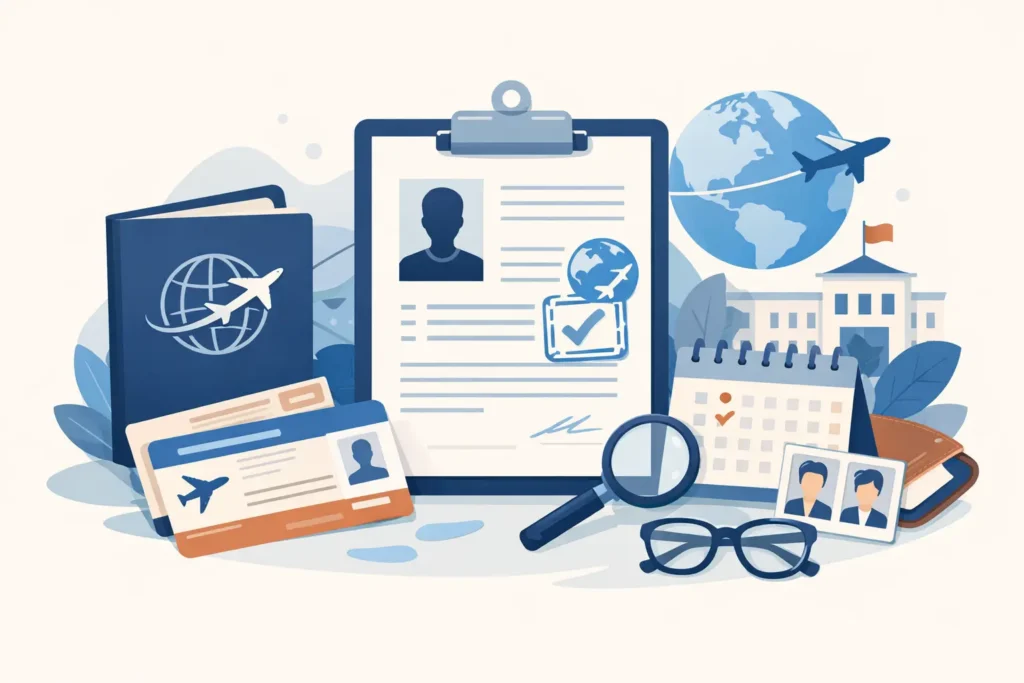
A visa application can be delayed or refused for reasons that have nothing to do with your genuine plans. A missing bank statement, an unclear identity document, or inconsistent dates across forms can create avoidable problems. If you are asking how to prepare visa documents, the short answer is this: treat your paperwork like evidence, not admin.
For Australia and New Zealand visa applications, decision-makers are not trying to guess what you mean. They assess what is in front of them. That means your documents need to be accurate, complete, readable and consistent with the visa criteria. The stronger your file, the easier it is for a case officer to follow your story and make a decision without unnecessary questions.
Why document preparation matters more than most applicants think
Many applicants assume the main challenge is filling in the online form. In practice, the quality of the supporting documents often decides whether an application looks credible and well prepared or rushed and risky. A good application does two things at once. It proves you meet the legal requirements, and it removes doubt.
This is especially important if your case has any complexity. Previous visa refusals, character issues, gaps in employment, self-employed income, family sponsorship, or relationship evidence all require careful presentation. Even straightforward visitor or student applications can run into trouble if the documents do not line up.
Well-prepared documents can also save time. If your evidence is ordered properly and explains itself, there is less chance of follow-up requests that slow the process down.
How to prepare visa documents in the right order
The most effective way to prepare a visa file is to start with the visa criteria, not with your paperwork pile. Before you upload anything, be clear on what the visa requires you to prove. That usually includes identity, purpose of travel or stay, financial capacity, employment or study position, health and character, and in some cases genuine temporary entrant or relationship evidence.
Once you know the criteria, sort your documents into categories. This sounds simple, but it is where many applicants lose control of the process. They upload files based on what they happen to have first, rather than what the application needs to show.
Start with identity and civil documents
Your passport is the foundation, but it is rarely the only identity evidence required. Depending on the visa, you may also need a birth certificate, marriage certificate, divorce documents, change of name records, national ID documents, or family registration records.
Check that names, dates of birth and passport details match across every document. Small inconsistencies can trigger larger concerns. If there is a genuine difference in spelling or format, it is better to explain it clearly than hope it will be ignored.
If any document is not in English, use a proper translation that meets the relevant requirements. Poor translations or informal versions can undermine otherwise strong evidence.
Build financial evidence with a clear story
Financial documents are often submitted in volume but not in a way that helps. More pages do not always mean stronger evidence. A decision-maker needs to understand where the money comes from, whether it is genuinely available, and whether it supports the purpose of the visa.
For an employed applicant, that may mean recent payslips, bank statements and a letter confirming employment. For a business owner, it may involve company records, tax returns, business bank statements and evidence of trading activity. For a sponsor, the focus may shift to proof of relationship, income and capacity to support the applicant.
If funds appeared in an account shortly before application, be ready to explain the source. Large unexplained deposits can raise questions. The same applies if the account holder is not the applicant.
Match employment, study or business records to the visa pathway
A skilled migration application will need a different evidence set from a visitor visa or student visa. The mistake many people make is using generic employment documents without checking whether they actually prove the points in issue.
Employment letters should be specific and ideally confirm role, duties, dates, salary and hours worked. Student documents should show enrolment, attendance where relevant, and financial capacity. Business migration files usually need a much more structured documentary package, with corporate records, ownership evidence, financials and transaction history.
This is where strategy matters. The best document is not always the most official-looking one. It is the one that directly supports the visa criterion.
Common mistakes when preparing visa documents
The most common document problems are not dramatic. They are usually basic errors repeated across the file.
One is inconsistency. If your form says you worked somewhere until March, but your reference says February, and your CV says April, the issue is no longer a date. It becomes credibility.
Another is poor file quality. Blurry scans, cut-off pages, upside-down documents and password-protected files slow assessment and make a weak impression. Every file should be legible, complete and correctly labelled.
Overloading the application can also work against you. If you upload large amounts of irrelevant material, the important evidence can get buried. A concise, targeted file is usually stronger than a sprawling one.
Then there is omission. Applicants often leave out documents that they think are minor because they are difficult to obtain or explain. In reality, an awkward document is often the one that needs to be addressed properly. If there is a gap, a discrepancy or a previous issue, tackle it directly.
How to prepare visa documents for complex cases
Some applications need more than standard evidence. If you have a previous refusal, a cancellation history, health concerns, character matters, unusual family circumstances or non-standard income, your documents need to do more than tick boxes. They need to manage risk.
That usually means adding context through a carefully prepared statement or submission. A good submission does not repeat the form. It explains what the evidence shows, addresses weak points honestly and puts the application into a coherent legal and factual framework.
For example, if your employment history includes gaps, explain them and support the explanation with evidence where possible. If your relationship evidence is spread across countries or time periods, structure it so the timeline is easy to follow. If your business income varies from year to year, show why.
Complex cases are where professional guidance can make a material difference. Experience matters when the issue is not just what to upload, but how to present it.
Practical checks before you lodge
Before submission, review the whole file as if you were the decision-maker seeing it for the first time. Ask whether the application tells a clear and believable story.
Check that names and dates match, translations are included where required, and all pages are visible. Make sure your supporting evidence is current enough for the visa type. Some documents lose value quickly, particularly bank statements, employment letters and police clearances.
It also helps to check whether any file needs a brief explanation. A short, factual note can prevent confusion, especially around unusual documents, naming differences or missing records.
If another person is sponsoring or supporting you, review their documents with the same care. Weak sponsor evidence can affect an otherwise strong application.
When speed matters and when it does not
Applicants often want to lodge quickly, especially if travel, study or employment dates are approaching. Sometimes speed is sensible. Sometimes it creates avoidable risk.
If the missing evidence is minor and can be added later if requested, early lodgement may be reasonable. If the missing material goes to the core of eligibility or credibility, lodging too soon can be a mistake. A fast application is only useful if it is also decision-ready.
This balance is particularly important for employer-sponsored, partner, business and character-sensitive matters. In those cases, a few extra days of preparation can save months of delay.
A stronger application starts before the upload stage
Preparing visa documents properly is not about collecting everything you have. It is about selecting the right evidence, arranging it logically and making your case easy to assess. That is true whether you are applying for a visitor visa, student visa, skilled pathway, family visa or business migration stream.
At Plan Migration, we see the difference every day between applications that simply contain documents and applications that are built to support an outcome. If you treat your documents as the case itself, not just attachments, you give your application its best chance from the start.
If you are unsure whether your file is complete, clear or strong enough, that uncertainty is worth addressing before you lodge. A well-prepared application does more than look professional. It gives the decision-maker fewer reasons to hesitate.



